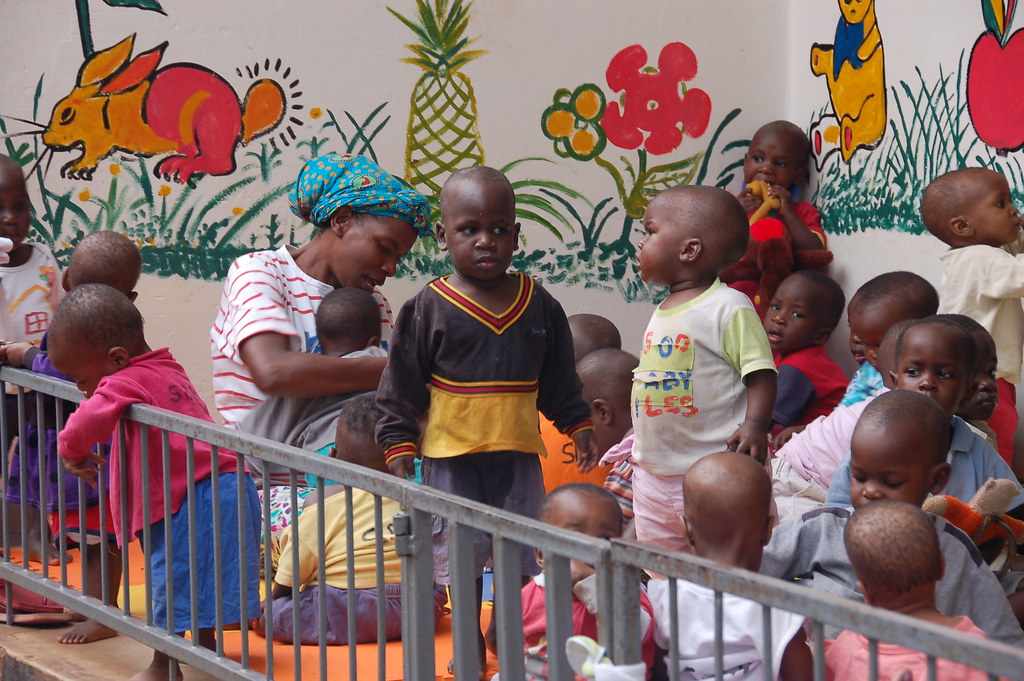
Last week, I took a little trip to Uganda. Being separated across the shores of Lake Victoria, Uganda is just a stone’s throw from Tanzania in relative terms, and fairly easy to get to. Having been in contact with an innovative education project called SINA (nestled up in the mountains of Mpigi, a few hours’ drive from the capital Kampala) I decided to pay them a visit whilst still living out here in East Africa.
 SINA (Social
Innovation Academy) is a
unique learning environment empowering youth to become job creators by
nurturing innovative project ideas into social enterprises. The Social
Innovation Academy (SINA) is turning around life stories of suffering into
positive catalysts of social change.
SINA (Social
Innovation Academy) is a
unique learning environment empowering youth to become job creators by
nurturing innovative project ideas into social enterprises. The Social
Innovation Academy (SINA) is turning around life stories of suffering into
positive catalysts of social change.The goal of SINA is to bring Ugandan youth from marginalised backgrounds to the point where they can be self-sustainable by starting and leading their own projects in the form of social businesses (with positive impact on the environment and positive impact on society).
Education is given through coaching, mentoring and training, with students learning to take responsibility, unlearning limiting beliefs and receiving assistance with start-up businesses and social entrepreneurship. The education project is transcending the country’s rigid educational model through a unique “free-sponsible” educational approach: there is no governance in the school, no rules and ultimately no restrictions.
Where did the need for SINA come from?
Watch this video to learn more
about the thinking behind the school:
Free-sponsible Education
One of the first things that
struck me upon arrival at SINA was the lack of hierarchy and management. There
are no rules, there are no people “in charge” as it were; instead the academy
is run through a series of learning groups. each group taking responsibility
for a different area of the school. The academy consists of scholars and
facilitators (the equivalent of students and teachers) however the scholars run
the academy together with the facilitators in autonomous task and
responsibility groups. They can make independent decisions in their areas, a
concept which empowers the scholars from the beginning to take on
responsibilities and grow with them constantly. The goal is that a scholar will
successfully lead a social enterprise when they leave the academy, and for that
to happen, he or she needs to be able to make important decisions, structure
time and set priorities. SINA lets the scholars run its academy to allow
empowerment to be learned from within.
The five learning groups are:
1. Sustainability
2. A-Team
3. Communications
4. Foundation
5. Community
Learning
 |
| Group meetings to discuss some of the week's issues. |
Each group meets twice a week to
discuss some of the core matters arising (e.g. budget for the week’s food,
accommodation issues, waste problems, social unrest etc.) and they try to end
each meeting with a resolution of what they can do. If they are unable to solve
these problems alone, they are then carried over to the weekly “Hub” meeting,
wherein a representative from each of the five groups meets together with a
facilitator to try to make plans to tackle any unresolved issues. I sat in on
several of these meetings during my visit and was interested to observe a range
of approaches to running a meeting and to conflict resolution.
An introduction to unlearning and
innovation
Students are encouraged to
“unlearn” the methodologies of rote and reaction from their formal schooling,
unleashing their full potential through intrinsic motivation rather than
punishments and rewards. They work through a series of learning stages, choosing
themselves when they are ready to graduate to the next stage.
The seven learning stages that all
scholars move through are:
- Orientation
- Confusion
- Skill Development
- Imagine
- Concentration
- Linking
- Graduation
The model of learning has been crafted using a
range of educational ideas, including NVC (Non-Violent Communication),
Self-Organisation, Active Listening, Design Thinking, Ideation Workshops,
Conflict Transformation and Team Building (learn more here). After the introduction stage, students
spend time in “confusion”.
 |
Scholar Julie wearing one of her designs.
|
I talked with one of the scholars, Julie
(co-founder of fashion start-up Smart-Up), about
this stage and she explained, “It is a period where you spend time trying to
forget the habits from school, trying to understand that you can be the master
of your own fate and you don’t have to follow everybody else”.
Speaking with the scholars during my stay, it seems that “Confusion” is the most challenging stage for most of the community. It is a time wherein they have to get used to being in a school with no rules, structure, discipline or order and have to learn that they are the boss of themselves. As Julie said “if I want to spend all day every day sleeping, I can do. But I soon realised that it was only me that was going to make my life a success, and so I soon learned to motivate myself and find my inner ambitions.”
During stage 3 (Skill Development), students are
introduced to a range of skilled projects happening within the community. SINA
focuses on community, empowerment and sustainability, modelling the concept of
upcycling within the village itself. All of the learning spaces are built out of old plastic bottles filled with soil
and turned into “bottle-bricks”.
 |
| The bottle huts - with a selection of sustainable roof options. |
 |
| It took just one month to build this - using 18,000 waste plastic bottles! |
 |
| Bottles are carefully placed into the walls to create unique designs. |
Watch this short video to find out more about the
building, design and development process:
The bottle construction runs as a social business
for some of the scholars (as does the interlocking brick business – an
innovative design using a third of the resources and manual labour as it cuts
out the need for cement and burning of bricks).
 |
| Clever use of interlocking bricks to cut down on labour, materials and time. |
Another social business that has become a success
is Sengozi - an
innovative Ugandan company founded in November 2014 producing the world’s first
Terrazzo and Epoxy Floorings out of plastic bags
 |
| A beautiful floor - made of eggs and plastic bags! |
and egg shells. The organisation uses plastic waste from the local area and the wasted
egg shells from a nearby poultry factory to turn into durable and long-lasting
flooring and tiles for houses.
.
 |
| The SINA cockerel - a survivor with ambition! |
One of the scholars
introduced the rather feisty resident cockerel to me, a refugee of another sort
as he was found inside one of the waste shells one day, and was thus raised and
nurtured by the SINA community to become the strong, wise cockerel he is today!
As well as the three core business models, there
are a range of income generating skills that the students can choose to learn
during their stay. These include:
1. Craft making
2. Book making
3. Agriculture
4. Sweater
knitting
5. Chakula Bora
(a canteen)
6. SINA Village
(an accommodation area for tourists and visitors)
A stay in SINA Village
 |
| Traditional mud-huts in SINA village |
During my visit to SINA I stayed
up at the academy, sleeping in SINA village. This is a short walk from the main
learning area and has been constructed as a traditional East African village,
with five basic mud huts containing a bed and mosquito net... and that's about
it.
 |
| My room! |
The accommodation has been deliberately built to be
basic, to give visiting tourists or friends a chance to experience living in an
old-style traditional East African village made from natural materials
available on the surrounding mountainside.
 |
| Simple sleeping - all you need! |
Sleeping in the hut was a
beautiful, peaceful experience and a really interesting return to simplicity.
The bio-gas
 |
| All materials for the hut construction are found on the hillside. |
toilet and bucket shower also allow tourists to explore
sustainability within the village itself, whilst the nearby smallholding grows
much of the food served at the academy and enhances the sense of sustainable
living within the village and wider community.
The Scholars
Part of the focus of SINA is to offer marginalised
youth an opportunity to support their own futures. As such, many of the
scholars have been recruited from one of the largest refugee camps in Uganda, Kyangwali refugee settlement located in Hoima District
South West Uganda and home to over 20,000 refugees.
During my time at SINA, four new
scholars arrived from the camp (coming from Sudan, Congo and Burundi) and I
spent time with Beatrice, a Congolese refugee and aspiring artist.
Beatrice left her home five years
ago and had been living in the camp with her surviving family. During that time
she harnessed her passion for art, working on a series of political cartoons to
start putting together a portfolio. With a clear talent for drawing combined
with a strong voice advocating for change, Beatrice told me how she hopes one
day to use her work to inspire movements across the world.
 |
| Smart-up fashion (plus a view of the bottle hut wall on the inside) |
I also met with Julie and Derrick, founders
of Smart-Up, a clothing and accessories business
 |
| Edgar the artist finishing one of his pieces |
SINA start-ups
Having now run for almost two
years, SINA has seen several of its scholars graduate and start up their own
businesses. One of the biggest success stories is Ruth Nabembezi, the founder
of 'Ask Without Shame', a mobile app providing emergency sex education and
advice.
 |
| Ruth's App Start-up |
Speaking about sex in Uganda is
considered a taboo, and many youth have little or no access to vital
information they need about their own sexual health. Ruth grew up in an
orphanage because both of her parents died of HIV. Her sister also contracted
the illness but when she fell sick, she was taken to a witch doctor because the
neighbours in the village thought she was being possessed, rather than sick.
Sadly she also passed away. Ruth knew that if she had been diagnosed and treated
by medical experts, she could still be alive. As a reaction to her own
tragedies, she founded the startup Ask Without Shame to provide a much needed
free and confidential service to her fellow Ugandans.
Finding inspiration from personal history, tragedy
and experience is part of what drives many of the scholars within their
start-up ideas and I was fortunate to meet with an incredible number of
inspired and inspiring youth who are working to promote positive change in
their communities.
Reflections
I had been interested in SINA for a while and was
keen to visit to be able to learn more about their unique educational model.
The concept of unlearning and finding knowledge from within is a core focus for
ThoughtBox and I was keen to link up with the SINA community to share ideas and
to learn more. There were many positive things happening within the community,
but there were also many challenges which an organic learning community such as
this is perhaps bound to have.
Because no-one is in charge, there were times when certain elements which could have been addressed were not being thought about - such as providing visitors with information about where to wash, eat, find water and how to find their way in the dark to the village...information that would have been rather useful to myself but were discovered in the end - much active learning was had (and a fair few tumbles in the dark!)
I also felt that the learning groups, although positive in their self-sustained model, were sometimes passing the problem from one group to another, with no-one perhaps taking charge and choosing to face the issue. Another element that really struck me about the place was a lack of communal space for all of the scholars and facilitators to come together - students ate in their rooms or scattered around the mountainside, and apart from a morning meeting which many didn't come to, there were no occasions (or opportunities) for the community to come together which I felt was a shame in such an isolated area. However, as is the nature of organic learning models, these are all elements that over time will be explored and adapted and learned from within.
And finally
My trip home was one of the highlights
of my East African travel thus far. On the way up to the village, it took six
hours of public transport as the main road had been closed because of a
presidential visit (not a highlight!) so it was back roads on the matatu (the
local mini-bus) for a long, dusty and bumpy journey:
 |
| Beautiful red-dirt roads of the Kampala countryside |
Coming back I decided to take the "short cut" which would be a two hour journey as oppose to six - a much better idea. It was a little more adventurous but a great deal more fun. It began with an hour long piki piki ride (motorbike taxi) along some incredible red-earth roads, passing through lush jungle and beautiful countryside. The video gives a little snapshot, though apologies for the rather poor one-handed back-of-a-motorbike video skills!
I then took a rather random ferry (with
a somewhat perilous amount of trucks filled with sand piled onto the deck)
across the lake:
 |
| How many cars can you put on a little ferry shuttle and still stay afloat...? |
 |
| ..quite a lot it seems! |
and then another matatu, another piki piki and a lovely serene walk along the shores of Lake Victoria before heading back to Arusha.
 All in all, it was a random, remarkable and inspiring visit and I look forward
to following the progress of the scholars as they move through their learning
journeys.
All in all, it was a random, remarkable and inspiring visit and I look forward
to following the progress of the scholars as they move through their learning
journeys.
For more information on SINA visit their website:
www.socialinnovationacademy.org